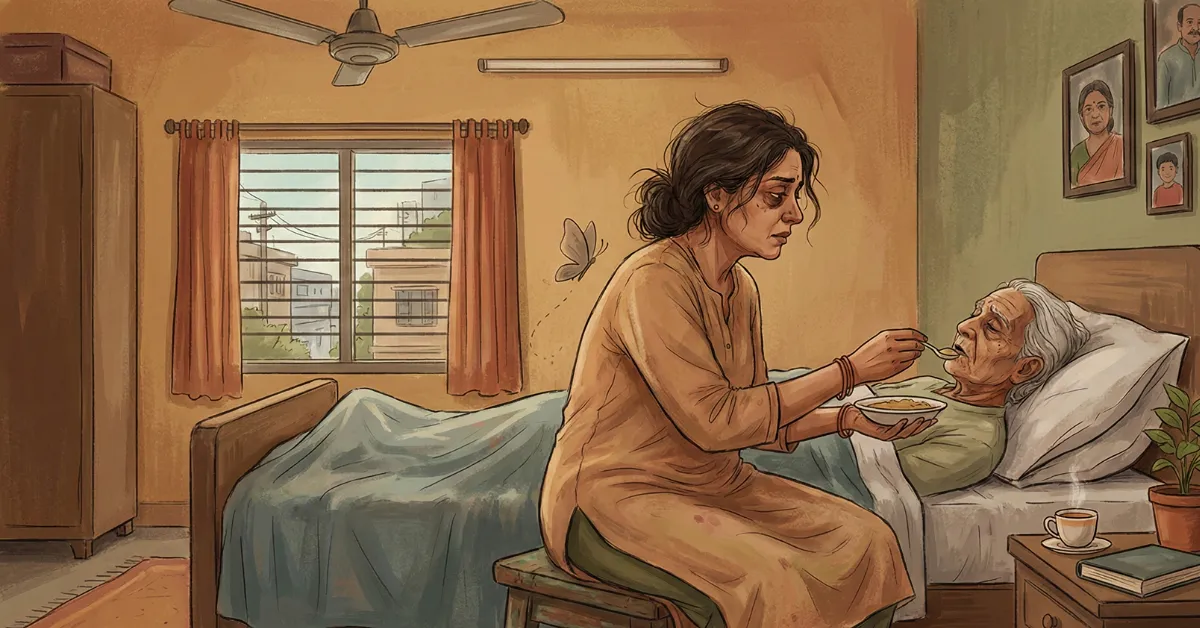
She wakes before dawn to prepare breakfast, helps her elderly mother-in-law to the bathroom, manages her father's medication schedule, drops the children at school, works a full day, comes home to cook dinner, assists with homework, puts the kids to bed, stays up late washing clothes, and then lies awake worrying about everyone except herself.
Sound familiar?
If you're a woman in Bangladesh caring for elderly parents, a sick spouse, a disabled child, or other family members—while juggling everything else life demands—you are performing one of the most important yet undervalued jobs in society. And there's a good chance you're exhausted, overwhelmed, and running on empty.
At Mindspace, we see you. We honor your sacrifice. And we want you to know: your mental health matters too.
The Silent Epidemic: Caregiver Stress in Bangladesh
In Bangladesh, caregiving falls disproportionately on women. Cultural expectations dictate that daughters, daughters-in-law, and wives are responsible for caring for family members—often with little recognition, support, or reprieve.
Who Are the Caregivers?
- Daughters-in-law caring for aging in-laws- Daughters looking after elderly parents- Wives supporting chronically ill husbands- Mothers raising children with disabilities or chronic illness- Sandwich generation women—caring for both children and parents- Sisters supporting siblings with mental or physical illness
The Invisible Work
Caregiving includes countless tasks that often go unnoticed:
| Category | Tasks |
|---|---|
| Physical Care | Bathing, feeding, dressing, mobility assistance, wound care |
| Medical Management | Medication, doctor appointments, treatments, advocacy |
| Emotional Support | Listening, comforting, managing behaviors, being present |
| Household Management | Cooking special meals, cleaning, laundry, errands |
| Financial Tasks | Managing bills, navigating insurance, making decisions |
| Coordination | Communicating with doctors, family members, helpers |
This work is 24/7, 365 days a year—with no salary, no vacation, and often no thanks.
Understanding Caregiver Burnout
Caregiver burnout is a state of physical, emotional, and mental exhaustion that occurs when caregivers don't get the help they need, or when they try to do more than they are able.The Stages of Caregiver Stress
Stage 1: Honeymoon Phase- Motivated and willing- "I can handle this"- May even feel good about helpingStage 2: Onset of Stress- Beginning signs of strain- Sleep problems, fatigue- Some frustrationStage 3: Chronic Stress- Persistent exhaustion- Health problems emerging- Social withdrawal- Irritability, resentmentStage 4: Burnout- Complete exhaustion- Depression, anxiety- Physical illness- Feeling trapped, hopeless- May affect quality of careStage 5: Compassion Fatigue/Breakdown- Unable to continue caring- Serious mental health crisis- Physical collapse- May harm self or care recipient (in extreme cases)Signs and Symptoms of Caregiver Burnout
Physical Symptoms:- Chronic fatigue and exhaustion- Getting sick frequently- Sleep problems (too much or too little)- Changes in appetite and weight- Headaches, body aches- Neglecting your own healthEmotional Symptoms:- Feeling overwhelmed and helpless- Anxiety about the future- Depression and sadness- Irritability and mood swings- Resentment toward the person you're caring for- Guilt about your feelings- Feeling like you're losing yourselfBehavioral Symptoms:- Withdrawing from friends and activities- Losing interest in things you used to enjoy- Neglecting your own needs- Using alcohol or medications to cope- Taking out frustration on others- Reduced productivity at workCognitive Symptoms:- Difficulty concentrating- Forgetfulness- Trouble making decisions- Negative thoughts- Feeling detached from lifeWhy Caregiving Is Especially Hard for Bangladeshi Women
Cultural Expectations
- "Good daughter-in-law" duty — caring for in-laws is expected- No option to say no — family pressure, societal judgment- Lack of male participation — husbands/brothers rarely share caregiving- Extended family expectations — but not always support
Limited Support Systems
- No formal caregiver support programs- Inadequate healthcare for chronic illness- Few professional caregiving services available- Expensive private nursing when available
Economic Factors
- Can't afford hired help — must do it yourself- Lost income if you reduce work- Financial dependence — can't leave situation- No caregiver benefits or compensation
Emotional Burdens
- Watching loved ones decline — grief before death- Difficult behaviors — dementia, mental illness- No recognition — work is invisible- Isolation — too busy to socialize
The Mental Health Impact
Caregivers face significantly higher rates of mental health issues:
Depression in Caregivers
Studies show caregivers are 2-3 times more likely to develop depression:
- Persistent sadness- Loss of hope- Feeling worthless- Thoughts of death
Anxiety Disorders
- Constant worry about the future- Fear of something going wrong- Panic attacks- Health anxiety (own or care recipient's)
Complicated Grief
- Grieving losses while person is still alive- Mourning the relationship that was- Anticipatory grief about death- Unresolved grief after caregiving ends
Physical Health Consequences
- Weakened immune system- Cardiovascular stress- Chronic pain conditions- Premature aging- Higher mortality rates than non-caregivers
Self-Care for Caregivers: Not Selfish, Essential
The most important thing a caregiver can do is care for themselves. This isn't selfish—it's necessary. You cannot pour from an empty cup.
Mental Health Tips for Caregivers
1. Accept Your Feelings
- It's okay to feel resentful — doesn't mean you don't love them- It's okay to feel sad — you're grieving many losses- It's okay to feel overwhelmed — caregiving IS overwhelming- Guilt is common — but usually undeserved
2. Set Realistic Expectations
- You can't do everything — and that's okay- Perfection isn't possible — good enough is good enough- Caregiving has limits — you're human- The person may not improve — not your failure
3. Ask for and Accept Help
- Make specific requests — "Can you stay with her Tuesday?"- Don't refuse offers — people want to help- Hire help if possible — even a few hours matters- Distribute among siblings — share the load fairly
4. Maintain Your Identity
- You are more than a caregiver — remember who you were- Keep one hobby or interest — even small- Stay connected to friends — even briefly- Don't lose yourself — in the role
5. Take Breaks
- Respite is essential — not a luxury- Even 15 minutes counts — step outside, breathe- Schedule regular breaks — treat them as non-negotiable- Use any available support — family, neighbors, services
6. Care for Your Body
- Sleep — even when it's difficult, prioritize rest- Eat properly — nutrition affects mood- Move your body — even brief exercise helps- Attend your own medical appointments — don't neglect your health
7. Practice Stress Management
Quick stress relievers:- Deep breathing (5 slow breaths)- Step outside for fresh air- Cup of tea mindfully- Stretching for 2 minutes- Listening to one song you loveLonger practices:- Meditation or prayer- Walking in nature- Journaling- Hot bath or shower- Talking to a friend8. Set Boundaries
- It's okay to say no to some requests- You don't have to do everything alone- Your needs matter too- Boundaries protect everyone including the care recipient
9. Plan for the Future
- What happens if you can't continue? Plan ahead- Explore options — facilities, hired care, family rotation- Legal and financial planning — power of attorney, etc.- Don't wait for crisis to make arrangements
Finding Professional Support
Sometimes self-care isn't enough. Professional help can make a significant difference:
Individual Therapy:- Process complex emotions- Develop coping strategies- Address depression and anxiety- Work through guilt and resentmentSupport Groups:- Connect with others who understand- Share experiences and tips- Feel less alone- Give and receive supportFamily Counseling:- Negotiate fair distribution of caregiving- Improve family communication- Address conflicts- Plan togetherFor Families: Supporting the Caregiver
If someone in your family is the primary caregiver, here's how to help:
Share the Load
- Don't leave it all to one person — usually the woman- Offer specific help — not just "let me know if you need anything"- Schedule regular times to take over- Financial contribution if you can't be physically present
Acknowledge Their Work
- Express gratitude — regularly and specifically- Recognize the difficulty — don't minimize- Ask how they're doing — and really listen- Validate their feelings — even uncomfortable ones
Give Them Breaks
- Insist they take time off — they may resist- Provide regular respite — predictable, scheduled- Plan something nice — for them specifically- Cover so they can rest — really rest
Don't Criticize
- Caregiving is hard — they're doing their best- Don't nitpick methods — if it works, it works- Save suggestions unless asked- Offer solutions, not judgment
When Caregiving Ends
Caregiving eventually ends—through recovery, moving to a facility, or death. This transition brings its own challenges:
Emotional Adjustments
- Grief — even if expected, death brings pain- Relief — and guilt about feeling relieved- Identity crisis — "Who am I now?"- Empty nest feeling — purpose suddenly gone- Unprocessed trauma — may surface after
Practical Considerations
- Financial changes if you stopped working- Career re-entry — skills may need updating- Relationship rebuilding — reconnecting with neglected relationships- Health recovery — addressing neglected health issues
Getting Support
- Continue or start therapy — grief processing- Take time to recover — don't rush- Reconnect with yourself — rediscover interests- Honor your service — what you did mattered
Mindspace: Here for Caregivers
At Mindspace, we understand the unique struggles of caregivers:
Our Services for Caregivers:
- Individual counseling — process emotions, develop coping skills- Support groups — connect with other caregivers- Family sessions — improve communication and load-sharing- Burnout recovery — intensive support when needed- Online sessions — convenient for busy schedules- Grief support — when caregiving ends
Why Caregivers Choose Mindspace:
- We understand your context — Bangladeshi family dynamics- No judgment — only support- Flexible scheduling — we know your time is limited- Affordable options — sliding scale available- Convenient online therapy — no need to travel
A Message to Caregivers
To every woman reading this while caring for someone else—while putting everyone's needs before her own—while wondering if she can keep going:
You are doing one of the most important jobs in the world.Your sacrifice matters. Your exhaustion is valid. Your feelings are understandable.You deserve support. You deserve rest. You deserve care.Asking for help is not failing. It's not abandoning your duty. It's ensuring you can continue to give—without destroying yourself in the process.
You cannot pour from an empty cup. Please let us help you fill yours.Frequently Asked Questions
Is it normal to feel resentful toward the person I'm caring for?
Yes. Resentment is one of the most common—and most guilt-inducing—feelings caregivers experience. It doesn't mean you don't love them; it means you're human and overwhelmed.How do I get family members to share caregiving duties?
Have a direct family meeting. Be specific about what's needed. Assign tasks based on each person's abilities. Put agreements in writing. Consider involving a counselor if communication is difficult.I don't have time for self-care. What can I do?
Start with micro-moments: 5 deep breaths, a 2-minute stretch, one mindful cup of tea. Even tiny breaks help. And remember: taking care of yourself isn't optional—it's essential.What if I'm the only one who can care for this person?
Even in this situation, you need support. Look for community resources, online support groups, and professional counseling. You may not be able to share the physical care, but you can get emotional support.If you're a caregiver running on empty, Mindspace is here for you. Contact us today for the support you deserve.You've been caring for everyone else. Let us help care for you.