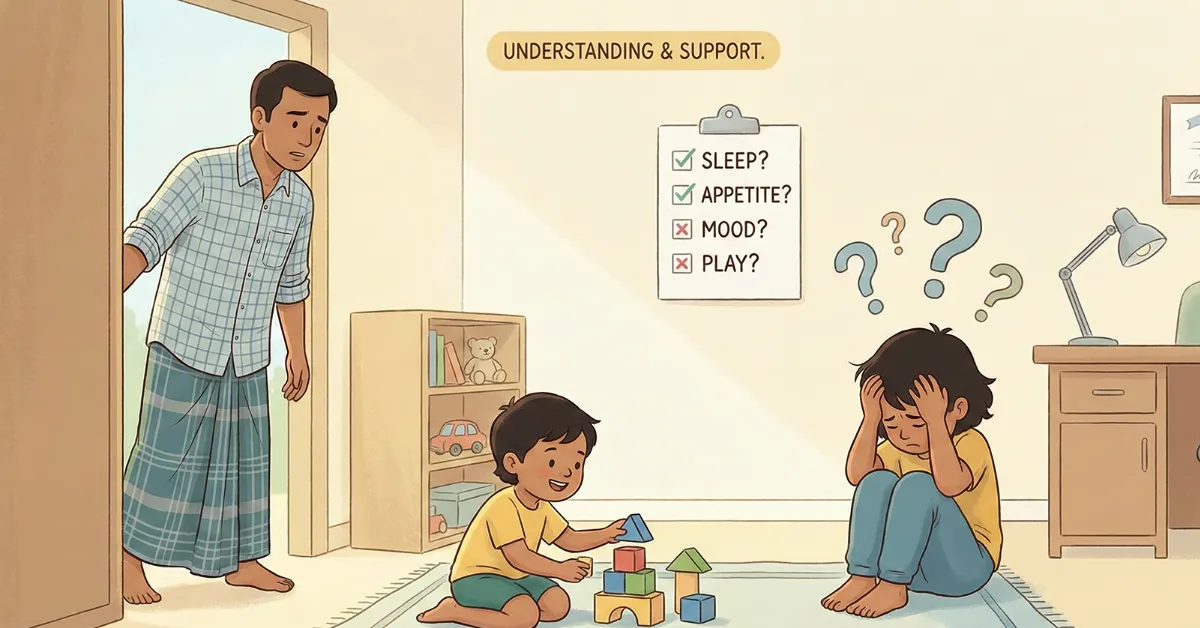
Every parent has moments of worry: Is this normal? Should I be concerned? Is something wrong with my child?
Tantrums at age 3. Defiance at 7. Moodiness at 12. Withdrawal at 15. All children go through difficult phases—but how do you know when it's just a phase versus something that needs professional attention?
At Mindspace, we help parents navigate this question every day. This guide will help you understand the difference between normal developmental challenges and signs that your child might benefit from seeing a child psychologist or therapist.
The Parent's Dilemma: When to Worry?
Why This Is Hard
| Challenge | Reality |
|---|---|
| Every child is different | No single "normal" standard |
| Behavior is age-dependent | What's concerning at 10 is normal at 2 |
| Context matters | Stress, life events affect behavior |
| Cultural variation | Expectations differ across cultures |
| Stigma exists | Fear of labeling your child |
| Information overload | Conflicting advice online |
The Good News
- Most children go through difficult phases and emerge fine- Early intervention, when needed, significantly improves outcomes- Seeking assessment doesn't mean there's definitely a problem- Professional guidance can help even if no diagnosis is made
Normal Developmental Behaviors by Age
Toddlers (1-3 Years)
Normal behaviors:- Tantrums when frustrated- Saying "no" frequently- Difficulty sharing- Separation anxiety- Testing limits- Emotional intensity- Short attention span- Inconsistent moodWhy it's normal: Toddlers are developing autonomy and emotional regulation. They lack language skills to express feelings.Preschoolers (3-5 Years)
Normal behaviors:- Imaginary friends- Fears (dark, monsters, etc.)- Magical thinking- Occasional lying (fantasy vs. reality)- Testing rules- Strong preferences- Sometimes aggressive when frustrated- Occasional regression under stressWhy it's normal: Preschoolers are developing imagination, understanding rules, and managing increasingly complex social situations.School-Age Children (6-12 Years)
Normal behaviors:- Arguing about fairness- Wanting independence- Peer relationships becoming important- Occasional school refusal- Worry about performance- Mood fluctuations- Sibling conflicts- Testing boundariesWhy it's normal: School-age children are navigating social hierarchies, academic expectations, and developing self-concept.Adolescents (13-18 Years)
Normal behaviors:- Moodiness and irritability- Desire for privacy- Challenging authority- Identity exploration- Risk-taking (some)- Intense peer focus- Sleep pattern changes- Push-pull with parentsWhy it's normal: Adolescents are undergoing massive brain changes, hormonal shifts, and identity development.Warning Signs: When Normal Becomes Concerning
The Key Question: IMPACT
The difference between a "phase" and a "problem" often comes down to impact:
Ask yourself:- Is this significantly affecting their daily functioning?- Is this harming relationships at home, school, or with peers?- Is this causing the child significant distress?- Is this persisting much longer than expected?- Is this much more intense than typical for their age?- Are multiple areas of life affected?If yes to several → Consider professional assessment.Red Flag Checklist
Emotional Warning Signs
| Warning Sign | Description |
|---|---|
| Persistent sadness | Low mood most of the time for 2+ weeks |
| Excessive worry | Anxiety that interferes with daily activities |
| Emotional outbursts | Intensity/frequency beyond age-appropriate |
| Hopelessness | Expressing that things will never get better |
| Fearfulness | Fears that prevent normal activities |
| Irritability | Constant anger or annoyance |
| Flat affect | Lack of emotional expression |
| Mood swings | Dramatic shifts that affect functioning |
Behavioral Warning Signs
| Warning Sign | Description |
|---|---|
| Aggression | Frequently hurting others, animals, or destroying property |
| Withdrawal | Significant social isolation |
| Regression | Loss of previously mastered skills |
| Sleep changes | Significant increase or decrease in sleep |
| Appetite changes | Major changes in eating patterns |
| Self-harm | Cutting, burning, or other self-injury |
| Risky behavior | Dangerous activities beyond typical exploration |
| Substance use | Alcohol, drugs, or other substances |
Academic/Cognitive Warning Signs
| Warning Sign | Description |
|---|---|
| Sudden grade drop | Significant decline in school performance |
| Can't concentrate | Attention problems affecting learning |
| School refusal | Persistent avoidance of school |
| Learning difficulties | Not progressing despite effort |
| Frequent complaints | Always "sick" to avoid school |
| Cognitive changes | Memory problems, confusion |
Social Warning Signs
| Warning Sign | Description |
|---|---|
| No friends | Unable to make or keep friendships |
| Bullying | Perpetrating or being victimized |
| Social anxiety | Extreme fear of social situations |
| Isolation | Preferring to be alone all the time |
| Relationship conflicts | Constant fighting with everyone |
| Inappropriate boundaries | Not understanding social rules |
Physical Warning Signs
| Warning Sign | Description |
|---|---|
| Frequent physical complaints | Headaches, stomach aches without medical cause |
| Sleep disturbance | Nightmares, insomnia, sleeping too much |
| Eating issues | Restricting, bingeing, purging |
| Hygiene neglect | Suddenly not caring about self-care |
| Developmental delays | Not meeting physical milestones |
Immediate Concerns (Seek Help Now)
🚨 Seek immediate help if your child:
- Talks about wanting to die or kill themselves- Has attempted self-harm or suicide- Hears or sees things others don't- Has severe disconnection from reality- Poses danger to self or others- Has experienced trauma (abuse, assault, accident)- Shows signs of psychosis- Has been exposed to violence
Emergency contacts:- Emergency: 999- Kaan Pete Roi: 01779-554391- National Mental Health Helpline: 16789Digital Life and Behavioral Concerns
The Screen Time Connection
Research shows links between unsupervised digital use and behavioral concerns:
| Screen-Related Issue | Potential Behavioral Impact |
|---|---|
| Excessive screen time | Attention problems, sleep disruption, reduced physical activity |
| Social media overuse | Anxiety, depression, body image issues |
| Violent content exposure | Increased aggression (in some children) |
| Cyberbullying | Depression, anxiety, school avoidance |
| Inappropriate content | Fear, confusion, premature sexualization |
| Online predators | Trauma, secrecy, behavioral changes |
| Gaming addiction | Withdrawal from life, aggression when gaming stopped |
Warning Signs Related to Digital Use
- Becomes extremely agitated when devices are removed- Secretive about online activities- Sleep patterns disrupted by device use- Declining interest in offline activities- Online relationships replacing real-world ones- Personality changes after screen use- Declining academic performance linked to device time- Finding inappropriate content in their history
The Assessment Process: What to Expect
What Happens When You Seek Help
Step 1: Initial Consultation- Parent interview about concerns- Developmental history- Family history- School and social information- Current symptoms and behaviorsStep 2: Child Assessment- Age-appropriate interaction- Play-based assessment (younger children)- Conversation and tasks (older children)- Observation of behavior- May include standardized assessmentsStep 3: Collateral Information- Teacher reports (with consent)- School records if relevant- Other professional reports- Medical historyStep 4: Feedback Session- Results explained to parents- Diagnosis (if any) discussed- Recommendations provided- Questions answered- Next steps outlinedPossible Outcomes
| Outcome | What It Means |
|---|---|
| No clinical concern | Behavior is within normal range; guidance provided |
| Adjustment issue | Responding to stress; may resolve with support |
| Clinical concern identified | Specific issue found; treatment recommended |
| Further assessment needed | More specialized evaluation required |
| Referral | Need for specialist (psychiatrist, developmental pediatrician, etc.) |
Common Childhood Mental Health Conditions
Anxiety Disorders
Signs:- Excessive worry- Physical complaints (stomach aches, headaches)- Avoidance of situations- Sleep problems- Need for reassuranceIncludes: Generalized anxiety, separation anxiety, social anxiety, specific phobias, selective mutismDepression
Signs:- Persistent sadness or irritability- Loss of interest in activities- Changes in sleep/appetite- Fatigue- Hopelessness- In children: irritability may be more prominent than sadnessADHD (Attention Deficit Hyperactivity Disorder)
Signs:- Difficulty sustaining attention- Easily distracted- Doesn't seem to listen- Difficulty organizing- Fidgeting, restlessness- Impulsivity- Symptoms present before age 12Autism Spectrum Disorder
Signs:- Social communication difficulties- Repetitive behaviors or interests- Sensory sensitivities- Difficulty with change- Present from early childhoodOppositional Defiant Disorder (ODD)
Signs:- Frequent temper outbursts- Argues with adults- Actively defies rules- Blames others- Easily annoyed- Angry and resentful- Beyond normal childhood defianceConduct Disorder
Signs:- Aggression toward people/animals- Property destruction- Deceitfulness or theft- Serious rule violations- More severe than ODDTrauma-Related Disorders
Signs:- Re-experiencing trauma (nightmares, flashbacks)- Avoidance- Negative mood changes- Hypervigilance- Following traumatic experienceFinding Help: Child Mental Health Services in Dhaka
Where to Seek Assessment
| Resource | Services |
|---|---|
| Child Development Centers | Government hospitals (Dhaka Shishu, others) |
| NIMH | National Institute of Mental Health |
| Private psychologists | Assessment and therapy |
| Psychiatrists | Medication if needed |
| Mindspace | Assessment, therapy, family support |
| School counselors | Initial guidance (if available) |
What to Look For in a Provider
- Qualified: Appropriate credentials and training- Experience: Works regularly with children- Approach: Child-friendly, developmentally appropriate- Family involvement: Includes parents in process- Communication: Explains clearly, answers questions- Cultural sensitivity: Understands local context
For Parents: Supporting Your Child
If You're Worried
During Assessment
If Your Child Needs Help
If No Clinical Concern Is Found
A Note on Stigma
We understand that seeking mental health help for your child can feel scary or shameful in our culture. Please know:
- Seeking help is strength, not weakness- Assessment doesn't mean diagnosis — Many assessments show no clinical concern- Early help prevents bigger problems later- Your child's wellbeing is worth more than others' opinions- You are being a good parent by paying attention
Mindspace: Here for Families
At Mindspace, we provide:
For Children:
- Comprehensive assessments- Individual therapy- Play therapy (younger children)- Social skills support- School-related concernsFor Parents:
- Parent guidance and training- Understanding your child's needs- Behavior management strategies- Support for your own stressFor Families:
- Family therapy- Communication improvement- Navigating challenges togetherWhy Families Choose Mindspace:
- Child-friendly environment- Qualified professionals- Non-judgmental approach- Culturally sensitive care- Clear communication- Parent involvementSelf-Assessment Checklist for Parents
Use this as a starting point, not a diagnosis:
In the past 2-4 weeks, my child has:| Behavior | Rarely | Sometimes | Often | Always |
|---|---|---|---|---|
| Seemed sad or hopeless | ○ | ○ | ○ | ○ |
| Been extremely irritable or angry | ○ | ○ | ○ | ○ |
| Worried excessively | ○ | ○ | ○ | ○ |
| Had trouble sleeping | ○ | ○ | ○ | ○ |
| Had changes in appetite | ○ | ○ | ○ | ○ |
| Withdrawn from friends/family | ○ | ○ | ○ | ○ |
| Had trouble concentrating | ○ | ○ | ○ | ○ |
| Refused to go to school | ○ | ○ | ○ | ○ |
| Had physical complaints (no medical cause) | ○ | ○ | ○ | ○ |
| Shown aggressive behavior | ○ | ○ | ○ | ○ |
| Talked about death or self-harm | ○ | ○ | ○ | ○ |
| Regressed to younger behaviors | ○ | ○ | ○ | ○ |
Frequently Asked Questions
At what age can a child see a therapist?
Children of any age can benefit from mental health support. For very young children, therapy often involves parents and play-based approaches.Will my child be labeled forever?
A diagnosis is a tool for getting help, not a permanent label. Many childhood issues resolve with proper support. Even lifelong conditions can be well-managed.Can I talk to the therapist without my child knowing?
Yes, parents can consult privately, especially initially. As therapy progresses, child involvement is important with age-appropriate confidentiality.How long does treatment take?
It varies widely depending on the issue. Some children improve in weeks, others need longer-term support. Your provider will discuss expectations.What if I disagree with the assessment?
Ask questions, seek clarification, and if needed, get a second opinion. You should feel confident in your child's care.If you're wondering whether your child needs help, that question itself is worth exploring. Mindspace is here to help you find answers.When in doubt, reach out. Your child's wellbeing is worth it.