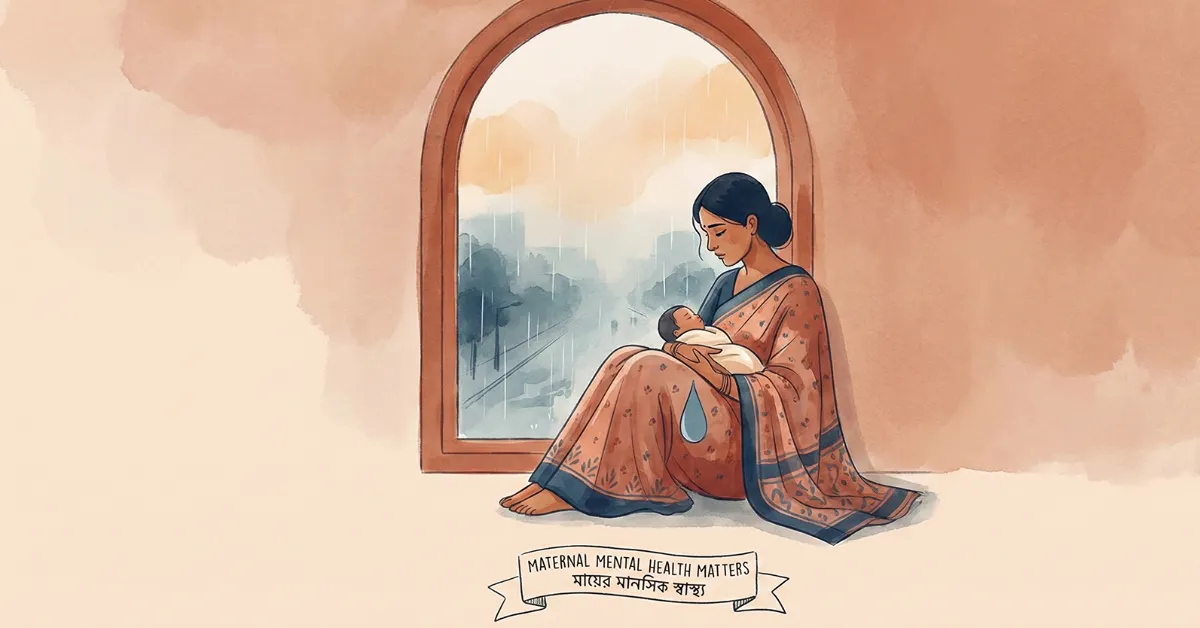
Having a baby is supposed to be one of the happiest moments of a woman's life—at least, that's what society tells us. But what happens when the joy doesn't come? What happens when instead of feeling blessed, you feel overwhelmed, empty, or even resentful toward your newborn? If this sounds familiar, you may be experiencing postpartum depression (PPD), and you are not alone.
In Bangladesh, up to 47% of new mothers experience symptoms of postpartum depression. Yet, most cases go undiagnosed and untreated because many families dismiss these feelings as normal "baby blues" or, worse, attribute them to "Jinn possession" or "bad air."
What is Postpartum Depression?
Postpartum depression is a serious mental health condition that affects mothers after childbirth. Unlike the temporary "baby blues" that many women experience in the first two weeks after delivery, PPD is more intense, lasts longer, and can severely impact a mother's ability to care for herself and her baby.Baby Blues vs. Postpartum Depression: Understanding the Difference
| Baby Blues | Postpartum Depression |
|---|---|
| Starts 2-3 days after birth | Can start anytime in the first year |
| Lasts up to 2 weeks | Lasts weeks, months, or longer |
| Mild mood swings | Severe depression and anxiety |
| Tearfulness | Persistent sadness and hopelessness |
| Resolves on its own | Requires professional treatment |
Recognizing Post Partum Depression Symptoms
Identifying PPD early is crucial for effective treatment. Here are the key symptoms to watch for:
Emotional Symptoms
- Persistent sadness that doesn't go away- Feeling worthless or like a "bad mother"- Guilt for not feeling happy about the baby- Anxiety and panic attacks- Feeling disconnected from your baby- Hopelessness about the future- Thoughts of harming yourself or your babyPhysical Symptoms
- Extreme fatigue beyond normal tiredness- Changes in appetite (eating too much or too little)- Sleep problems (insomnia even when baby sleeps)- Body aches and headaches- Low energy for daily activitiesBehavioral Symptoms
- Withdrawing from family and friends- Difficulty bonding with your newborn- Crying for no apparent reason- Inability to care for yourself or your baby- Loss of interest in activities you once enjoyedWhy is PPD So Common in Bangladesh?
Research shows that Bangladeshi women face unique risk factors that increase their vulnerability to postpartum depression:
1. Family Food Insecurity
Studies have found a direct link between household food insecurity and maternal depression. When a new mother worries about whether her family will have enough to eat, the stress compounds the challenges of new motherhood.2. Domestic Violence
Unfortunately, violence against women remains prevalent in Bangladesh. Women who experience physical, emotional, or sexual violence during pregnancy or postpartum are significantly more likely to develop PPD.3. Social Isolation
Many new mothers in Bangladesh face isolation, especially if they live with extended family members who don't understand mental health. The pressure to be a "perfect mother" while receiving criticism can be overwhelming.4. Lack of Spousal Support
In many households, husbands may not understand the emotional toll of childbirth. When a new mother doesn't receive emotional and practical support from her partner, PPD risk increases dramatically.5. Economic Dependence
Women who are financially dependent on their husbands or in-laws often feel trapped and unable to seek help for their mental health struggles.6. Gender Preference Pressure
In some families, pressure to produce a male child adds immense stress. Mothers who give birth to daughters may face criticism and emotional abuse, worsening depressive symptoms.Depression Meaning in Bengali: Breaking the Language Barrier
In Bengali, depression is often called "বিষণ্ণতা" (Bishonnota) or "মানসিক অবসাদ" (Manoshik Oboshad). However, many people still don't recognize it as a medical condition. Common misconceptions include:
- "এটা শুধু মনের ব্যাপার" (It's just in your head)- "সবার সাথেই হয়" (This happens to everyone)- "বাচ্চা নিয়ে ব্যস্ত থাকলে ঠিক হয়ে যাবে" (You'll be fine once you're busy with the baby)
These beliefs are harmful and prevent mothers from getting the help they need.When to Seek Professional Help
Seek help immediately if you experience:
- Thoughts of harming yourself or your baby- Inability to sleep for several days- Severe panic attacks- Hallucinations or hearing voices- Feeling like you can't go on- Complete inability to care for your baby
Emergency Resources
- National Mental Health Helpline: 16789- Kaan Pete Roi: 01779-554391- Mindspace: Visit our counselors pageTreatment Options for Postpartum Depression
PPD is treatable, and most women recover completely with proper care. Treatment options include:
1. Psychotherapy
- Cognitive Behavioral Therapy (CBT): Helps identify and change negative thought patterns- Interpersonal Therapy (IPT): Focuses on improving relationships and communication- Support Groups: Connecting with other mothers facing similar challenges2. Medication
- Antidepressants: Safe options are available for breastfeeding mothers- Always consult a psychiatrist before starting any medication3. Lifestyle Changes
- Regular exercise (even a daily walk helps)- Proper nutrition and hydration- Sleep whenever possible- Accepting help from family and friends4. Support System
- Talking to your partner about your feelings- Joining a new mothers' group- Staying connected with friends and familyHow Husbands Can Help
If your wife is struggling with PPD, here's how you can support her:
Breaking the Stigma: It's Okay to Not Be Okay
Experiencing postpartum depression does not make you a bad mother. It does not mean you don't love your baby. It is a medical condition caused by hormonal changes, stress, and various life circumstances.
Seeking help is a sign of strength, not weakness. By getting treatment, you're ensuring you can be the best mother possible for your child.
Mindspace is Here for You
At Mindspace, we understand the unique challenges faced by Bangladeshi mothers. Our team of qualified counselors and mental health professionals can provide:
- Confidential counseling sessions- Online therapy options for new mothers who can't leave home- Family counseling to help partners and in-laws understand PPD- Support groups for new mothers
You don't have to face this alone. Reach out to Mindspace today.Frequently Asked Questions
How long does postpartum depression last?
Without treatment, PPD can last for months or even years. With proper treatment, most women start feeling better within a few weeks to months.Can postpartum depression affect my baby?
Yes, untreated PPD can affect bonding with your baby and impact their emotional development. This is why getting help early is so important.Is it normal to not feel love for my baby immediately?
Many mothers don't feel an instant bond with their newborn. If this feeling persists beyond a few weeks or is accompanied by other symptoms, talk to a professional.Can men get postpartum depression?
Yes, fathers can experience paternal postnatal depression. If you're a new father struggling with your mental health, seeking help is equally important.Remember: Postpartum depression is common, treatable, and nothing to be ashamed of. Your mental health matters—for you and for your baby.If you or someone you know is struggling with postpartum depression, contact Mindspace today for compassionate, professional support.