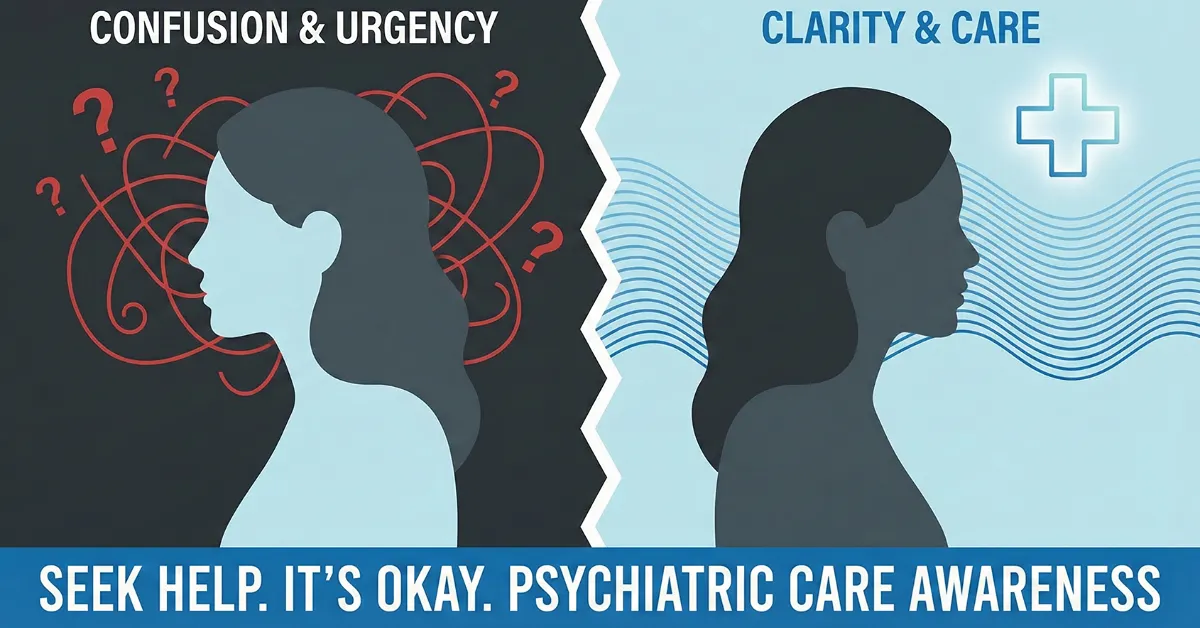
⚠️ IMPORTANT: Postpartum psychosis is a psychiatric emergency. If you believe someone is experiencing symptoms described in this article, seek emergency medical help immediately. Call 999 or go to the nearest hospital emergency room.
Every year, families across Bangladesh face a terrifying situation they don't understand: a new mother—sometimes within days of giving birth—suddenly becomes someone they don't recognize. She may stop sleeping entirely, talk rapidly about things that don't make sense, see things that aren't there, or in the most frightening cases, believe she must harm herself or her baby.
Too often, these symptoms are attributed to "Jinn possession," "black magic," or "evil spirits." Families may take the mother to faith healers instead of hospitals, losing precious time. Sometimes, the consequences are tragic.
Postpartum psychosis is not spiritual. It is a medical emergency. And understanding this could save lives.At Mindspace, we believe that education saves lives. This article provides critical information that every family—especially those with pregnant women or new mothers—needs to know.
What Is Postpartum Psychosis?
Postpartum psychosis (PPP) is a rare but severe mental illness that can occur in the days or weeks after childbirth. It affects approximately 1-2 out of every 1,000 new mothers—rare, but serious.Unlike the "baby blues" or even postpartum depression, postpartum psychosis involves a break from reality. The mother may experience hallucinations, delusions, and severely disorganized thinking.
Key Facts About Postpartum Psychosis
| Aspect | Details |
|---|---|
| Onset | Usually within 2 weeks of delivery, often within first 3-4 days |
| Frequency | 1-2 per 1,000 births |
| Risk Level | Medical emergency requiring hospitalization |
| Treatability | Highly treatable with proper psychiatric care |
| Recurrence | Higher risk in future pregnancies |
Postpartum Depression vs. Postpartum Psychosis: Know the Difference
Understanding the difference between these conditions is literally life-saving:
Postpartum Depression (PPD)
- Reality intact — Knows what's real- Gradual onset — Develops over weeks- Sad mood — Feelings of hopelessness- Anxiety — Excessive worry- Sleep issues — Trouble sleeping even when baby sleeps- Bonding difficulties — May feel disconnected from baby- Thoughts of self-harm — May occur but usually recognizes them as wrong
Postpartum Psychosis (PPP)
- Reality impaired — Confused about what's real- Rapid onset — Comes on suddenly, within days- Mood extremes — Mania (high energy) or severe depression- Hallucinations — Seeing or hearing things not there- Delusions — Believing things that aren't true- Severe insomnia — May not sleep for days- Disorganized thinking — Speech and thoughts jumbled- Risk to self and baby — May act on delusional beliefs
If any symptoms of psychosis are present, this is an emergency.Recognizing the Warning Signs
Early Warning Signs (First 24-72 Hours)
Families should watch for:
- Inability to sleep — Not just difficulty, but complete insomnia- Restlessness and agitation — Unable to sit still- Rapid mood changes — Euphoria to tearfulness within minutes- Confusion — Not recognizing familiar people or places- Suspicious or fearful behavior — Paranoia developing- Decreased need for sleep — Full of energy despite no rest
Psychotic Symptoms
Hallucinations (Perceiving things that aren't there):- Hearing voices — Commands, commentary, or conversations- Seeing things — People, shadows, objects not present- Smelling or feeling things that aren't realDelusions (Fixed false beliefs):- Paranoid delusions — "They're trying to poison me/the baby"- Grandiose delusions — "I have special powers"- Religious delusions — "God has given me a mission"- Delusions about the baby — "The baby is not mine" or "The baby is evil"- Nihilistic delusions — "I am dead" or "The world is ending"Disorganized Behavior:- Bizarre actions — Inappropriate or dangerous behavior- Incoherent speech — Doesn't make sense- Severe confusion — About time, place, identity- Catatonia — Unresponsive or frozenRed Flags Requiring Immediate Emergency Care
🚨 Call 999 or go to the hospital immediately if:
- Mother expresses thoughts of harming herself- Mother expresses thoughts of harming the baby- Mother is seeing or hearing things others don't- Mother believes something clearly false with conviction- Mother has not slept for 48+ hours- Mother doesn't recognize the baby as hers- Mother is severely confused or disoriented- Mother is talking about death, sacrifice, or religious missions involving the baby
Why This Is NOT Jinn, Black Magic, or Spiritual Possession
In Bangladesh and many South Asian cultures, symptoms of psychosis are often attributed to supernatural causes:
Why Families Believe This
- Sudden, dramatic change — "She was fine yesterday"- Strange behavior — Acting completely out of character- Talking to unseen entities — Seems like responding to spirits- Religious content in delusions — Talking about God, demons, etc.- Cultural framework — This is how such symptoms have been explained for generations
The Medical Reality
Postpartum psychosis is caused by:- Dramatic hormonal shifts after delivery- Sleep deprivation — Severe and sudden- Genetic vulnerability — Family history of bipolar disorder or psychosis- Immune system changes — Inflammation affecting the brain- Previous psychiatric history — Especially bipolar disorder
It is a brain illness, not a spiritual one.The Danger of Spiritual Attribution
When families seek faith healers instead of medical care:
- Precious time is lost — Psychosis can worsen rapidly- Effective treatment is delayed — Medication is life-saving- Risk increases — To both mother and baby- Tragedy may occur — In the worst cases
Faith and medicine are not mutually exclusive. Families can pray AND seek proper medical treatment. In fact, getting medical care IS the responsible, caring choice.Risk Factors for Postpartum Psychosis
Some women are at higher risk:
High-Risk Factors
- Personal history of bipolar disorder — Highest risk (25-50% chance of PPP)- Personal history of postpartum psychosis — High recurrence risk- Family history of bipolar disorder — Genetic component- Family history of postpartum psychosis — In mother, sister, etc.- Personal history of schizophrenia or psychotic episodes
Other Risk Factors
- First pregnancy — Higher risk than subsequent pregnancies- Sleep deprivation — Can trigger episode- Stressful delivery — Complications, trauma- Stopping psychiatric medication for pregnancy- Thyroid dysfunction — Should be checked
If You Have Risk Factors
Plan ahead:- Inform your obstetrician and psychiatrist about your history- Have a monitoring plan for the postpartum period- Arrange for support to ensure you can sleep- Know the warning signs- Have emergency contacts ready- Consider prophylactic medication (discuss with psychiatrist)Treatment for Postpartum Psychosis
Postpartum psychosis is highly treatable. With proper care, most women recover fully.
Immediate Treatment
Hospitalization is usually necessary:- For safety of mother and baby- For medication management- For monitoring and support- Usually 1-3 weeks, sometimes longerMedications
Common treatments include:- Antipsychotics — To stop hallucinations and delusions- Mood stabilizers — Especially if bipolar features present- Benzodiazepines — For sleep and agitation (short-term)- Antidepressants — If depressive features presentOther Treatments
- Electroconvulsive therapy (ECT) — Highly effective, sometimes used- Supportive therapy — Once stable- Family education — Critical for recovery support
Recovery
- Most women recover fully with treatment- Recovery typically takes weeks to months- Continued medication often needed- Therapy helps process the experience- Mother-baby bonding can be rebuilt- Future pregnancies need careful planning
What Families Should Do
If You Suspect Postpartum Psychosis
Immediate steps:At the Hospital
- Provide history — When symptoms started, what you've observed- Mention recent childbirth — Some staff may not connect it- Advocate for psychiatric evaluation — Not just medical- Stay with her if possible — She needs support
During Treatment
- Follow medical advice — Take medications as prescribed- Provide support — Visit, reassure her- Care for the baby — Ensure infant is safe and fed- Don't blame her — This is illness, not choice- Be patient — Recovery takes time
After Discharge
- Ensure medication compliance- Watch for warning signs of relapse- Arrange support — She shouldn't be alone with baby initially- Attend follow-up appointments- Help with baby care — Gradually rebuild her confidence- Consider therapy — For processing the experience
After Recovery: Bonding and Moving Forward
Many women fear they've damaged their relationship with their baby. The good news:
- Babies are resilient — Early disruption doesn't mean permanent damage- Bonding can develop — Even if delayed- Mothers can be wonderful parents — After recovery- Treatment helps — Including mother-infant therapy if needed
Tips for Rebuilding Bond
- Skin-to-skin contact when stable- Feeding time as bonding opportunity- Talking and singing to baby- Gentle play and eye contact- Be patient with yourself — It's a process- Professional support if struggling
Future Pregnancies
Women who've had postpartum psychosis face higher risk in future pregnancies:
- 25-50% recurrence rate approximately- Planning is essential — Work with psychiatrists before conceiving- Prophylactic treatment may be recommended- Close monitoring during pregnancy and postpartum- Sleep protection critical after delivery- Support system must be in place
Having had PPP doesn't mean you can't have more children. It means you need careful planning and support.Resources and Emergency Contacts
Emergency Numbers
| Service | Number |
|---|---|
| National Emergency | 999 |
| Mental Health Helpline | 16789 |
| Kaan Pete Roi | 01779-554391 |
Hospitals with Psychiatric Services
- National Institute of Mental Health (NIMH) — Dhaka- Bangabandhu Sheikh Mujib Medical University- Dhaka Medical College Hospital- Combined Military Hospital (CMH)
Mindspace Support
At Mindspace, we provide:
- Education and prevention counseling- Support during recovery from PPP- Family counseling to help families cope- Postpartum support for future pregnancies- Mother-infant bonding support
A Message to Families
If your family is facing postpartum psychosis, we know how frightening and confusing this is. Please remember:
- This is not her fault — It's a medical condition- This is not caused by Jinn or spirits — It's her brain chemistry- She needs medical treatment — Not faith healing alone- She can recover fully — With proper care- Your support matters — Stand by her
And if you're ever in doubt: when in doubt, go to the hospital. It's always better to be safe.
Frequently Asked Questions
Can postpartum psychosis happen to anyone?
It can happen to any woman after childbirth, but it's more common in women with personal or family history of bipolar disorder or previous postpartum psychosis.Will she remember what happened during the psychosis?
Memory of the episode varies. Some women have clear memories, others have fragmented or no memories. This can be processed in therapy during recovery.Is it safe for her to breastfeed on medication?
Many psychiatric medications are compatible with breastfeeding. A psychiatrist can help choose medications that are safe, or the family can decide to formula feed if preferred.How do we tell people what happened?
You're not obligated to share details with anyone. If asked, you can simply say she had a medical complication after delivery and is recovering well.Postpartum psychosis is an emergency—but it's a treatable one. Fast action saves lives. If you see the warning signs, get help immediately.Mindspace stands with families facing this crisis. You're not alone.