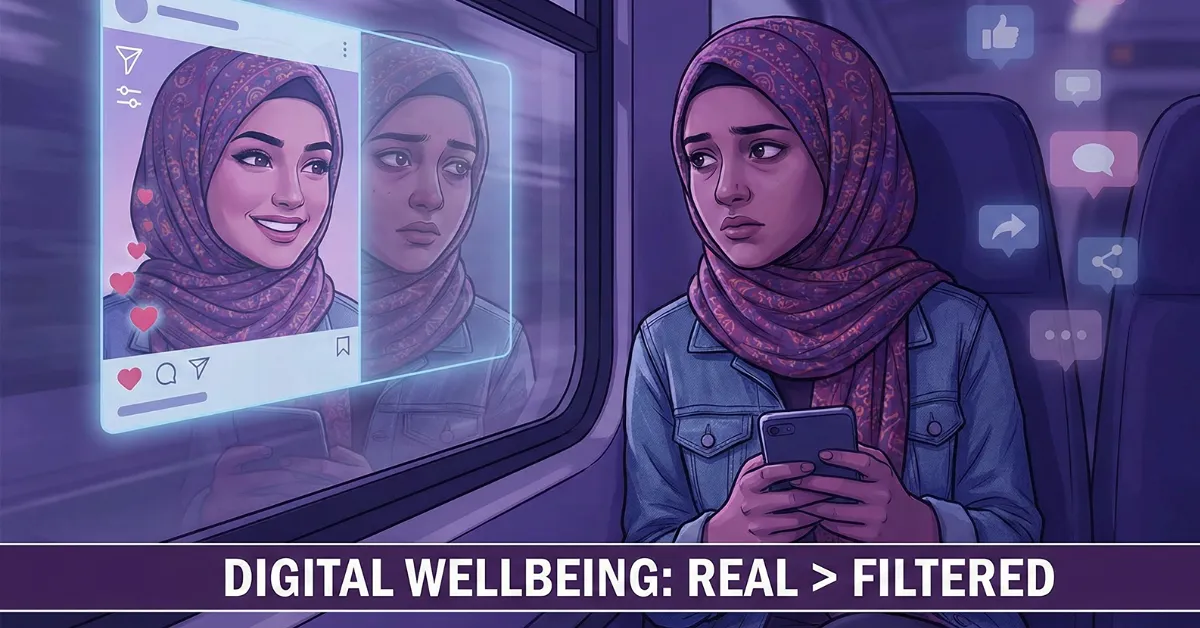
She takes 47 selfies to get one that looks "okay." She compares her body to filtered images of influencers. She checks her phone constantly for likes, comments, validation. She feels left out when friends post group photos she wasn't in. She goes to sleep anxious, wakes up anxious, and the first thing she does is scroll.
If this sounds like your teenage daughter—or if this sounds like you—you're witnessing the social media anxiety epidemic affecting an entire generation of girls.
At Mindspace, we're deeply concerned about the mental health of Bangladeshi teenage girls growing up in a world where their worth seems measured in likes, followers, and filters. This article is for parents trying to understand, and for girls trying to survive.
The Digital Reality for Bangladeshi Teen Girls
Social Media Usage in Bangladesh
- Over 50 million Bangladeshis are on social media- Fastest-growing users: Young people aged 13-24- Most popular platforms: Facebook, Instagram, TikTok, YouTube- Average screen time: 4-6 hours daily for many teens- Smartphones: Increasingly accessible even in lower-income households
Why Girls Are Particularly Vulnerable
Research consistently shows that social media affects girls more negatively than boys:
- Girls use social media more for social comparison- Girls are more targeted by appearance-focused content- Girls face more cyberbullying and harassment- Girls are more likely to internalize negative messages- Cultural expectations around beauty and behavior are amplified online
How Social Media Harms Teen Mental Health
1. The Comparison Trap
Social media creates a highlight reel of everyone's life:
What teens see:- Perfect bodies (filtered, posed, edited)- Perfect lives (only happy moments shared)- Perfect relationships (curated couple content)- Perfect achievements (bragging, not struggle)What teens feel:- "My body isn't good enough"- "My life is boring compared to theirs"- "Everyone is happier than me"- "I'm not achieving enough""I know the photos are edited but I still feel ugly when I see them." — Teenager, Dhaka
2. Body Image Issues
Social media is a body image battlefield for girls:
The Problem:- Filters change facial features (bigger eyes, smaller nose, clearer skin)- Editing apps slim waists, enlarge hips, smooth everything- Beauty influencers set impossible standards- Algorithm shows more content about appearance- Comments on bodies are normalizedThe Impact:- Body dissatisfaction — Hating how you look- Disordered eating — Restricting, bingeing, purging- Exercise obsession — Working out for looks, not health- Cosmetic procedure desire — Even among young teens- Self-harm — Related to body hatred3. Social Anxiety
Social media creates new forms of social anxiety:
- Fear of posting — What if no one likes it?- Fear of being left out (FOMO) — Seeing friends without you- Fear of online judgment — Comments, shares, screenshots- Fear of not being online — Missing out on conversations- Fear of face-to-face — Social skills weakening
4. Cyberbullying
Online harassment takes many forms:
| Type | Examples |
|---|---|
| Direct attacks | Hateful comments, messages, tags |
| Exclusion | Deliberate leaving out, blocking |
| Outing | Sharing private information publicly |
| Impersonation | Fake accounts, pretending to be someone |
| Image-based abuse | Sharing photos without consent |
| Harassment | Repeated unwanted contact |
5. Validation Addiction
The like button has created a generation seeking external validation:
- Dopamine hits from notifications- Self-worth tied to numbers — Followers, likes, comments- Constant checking — Addictive behavior patterns- Mood fluctuation — Based on social media response- Withdrawal symptoms — Anxiety when unable to check
6. Sleep Disruption
Social media destroys sleep:
- Blue light from screens disrupts melatonin- Late-night scrolling delays bedtime- Notifications wake them up- FOMO keeps them checking "one more time"- Stress and anxiety from content makes sleep harder
Poor sleep → Worse mental health → More social media use → Worse sleep(A vicious cycle)
7. Distorted Reality
Teens are growing up with warped perceptions:
- What relationships look like — Unrealistic expectations- What success looks like — Overnight fame, viral content- What beauty looks like — Filtered, edited, artificial- What happiness looks like — Performative, not real- What is "normal" — Extreme content gets attention
Recognizing the Signs: Is Your Teen Struggling?
Warning Signs for Parents
Behavioral Changes:- Constantly on phone, secretive about it- Mood changes after using social media- Avoiding activities she used to enjoy- Withdrawing from family- Changes in eating habits- Sleep problems- Declining gradesEmotional Signs:- Low self-esteem, negative self-talk- Comparing herself to others constantly- Anxiety about appearance- Fear of missing out- Needing validation excessively- Overreaction to social situationsPhysical Signs:- Tired from lack of sleep- Physical symptoms of anxiety- Changes in weight- Excessive concern with appearanceQuestions for Teens to Ask Themselves
- Do I feel worse about myself after scrolling?- Do I compare my body to what I see online?- Am I anxious when I can't check my phone?- Is my self-worth tied to likes and followers?- Do I feel left out when I see friends' posts?- Am I hiding my phone use from parents?- Is social media affecting my sleep?- Do I feel pressure to look "perfect" online?
If you answered yes to several, it might be time to make changes.
Solutions: Building Digital Wellbeing
For Teenage Girls
1. Curate Your Feed
- Unfollow accounts that make you feel bad- Follow accounts that inspire, educate, uplift- Mute friends who trigger comparison- Block anyone who harasses you- Diversify — Follow people who look different from you
2. Set Boundaries
- Time limits — Use app timers- Phone-free zones — Bedroom, dinner table- Phone-free times — First hour awake, before bed- Notification control — Turn off most notifications- Regular breaks — Social media fasts (weekends, weeks)
3. Reality Check
- Remember filters exist — Nothing is real- Influencers are performing — It's their job to look good- You see highlight reels — Not real life- Numbers don't equal worth — Likes ≠ value as a person- Comparison is the thief of joy — Focus on your own journey
4. Build Offline Confidence
- Real-world activities — Sports, art, music, volunteering- Face-to-face friendships — Real connection- Skills and achievements — That aren't about appearance- Values beyond beauty — Intelligence, kindness, humor- Body appreciation — What your body can do, not just how it looks
5. Talk About It
- Tell a trusted adult if you're struggling- Talk to friends — They probably feel the same- Seek professional help if it's affecting your life
For Parents
1. Educate Yourself
- Learn the platforms — What is she using?- Understand the culture — Influencers, trends, language- Know the risks — What to watch for- Don't dismiss it — Social media is real life for them
2. Open Communication
- Don't lecture — Listen first- Be curious, not judgmental — "Tell me about that"- Share your concerns calmly — Not with accusations- Discuss what she sees — Watch content together sometimes- Create safe space — She can come to you with problems
3. Set Reasonable Limits
- Agree on rules together — She's more likely to follow them- Be consistent — Rules apply even when it's hard- Model good behavior — Check your own phone use- Screen-free family time — Everyone, not just her- Gradual independence — Loosen rules as she shows responsibility
4. Support Her Self-Esteem
- Praise non-appearance qualities — Intelligence, kindness, effort- Limit your own body talk — She hears your comments about yourself- Diverse media exposure — Books, movies with different body types- Real conversations — About values, goals, relationships- Unconditional love — She's valuable regardless of appearance
5. Know When to Intervene
- Cyberbullying — Report, document, involve school if needed- Dangerous behavior — Restrict access if necessary- Mental health crisis — Get professional help immediately- Eating disorders — Seek specialist treatment- Self-harm or suicidal thoughts — Emergency response
For Schools
- Digital literacy education — How to use social media safely- Body image programs — Critical media literacy- Anti-bullying policies — Including cyberbullying- Mental health support — Counselors available- Parent education — Help families navigate this
When Social Media Is Affecting Mental Health
Professional Help Is Needed When:
- Anxiety or depression is persistent- Eating patterns are concerning- Self-harm is occurring- Suicidal thoughts are present- Daily functioning is impaired- She can't reduce use despite trying
Treatment Options
Individual Therapy:- CBT for social anxiety- Body image therapy- Addressing underlying issues- Building healthy coping skillsFamily Therapy:- Improving communication- Addressing family dynamics- Creating supportive environmentGroup Therapy:- Connect with peers facing similar issues- Practice social skills- Reduce isolationA New Trend: Intentional Social Media Use
Some teens are pushing back:
The "Finsta" Generation
- Fake Instagram accounts — For close friends only- BeReal app — Unfiltered, real-moment sharing- Digital detox challenges — Planned breaks- Authenticity movement — Sharing real struggles- Mental health awareness — Talking about anxiety openly
Encouraging Critical Thinking
Help teens question what they see:
- "Who benefits from me feeling bad about my body?"- "What is this influencer trying to sell me?"- "Is this making me feel better or worse?"- "What would I be doing if I wasn't scrolling?"- "Is this connection or performance?"
Mindspace: Supporting Teens and Families
At Mindspace, we understand the unique challenges facing teenage girls in the digital age:
Our Services for Teens:
- Individual counseling — For anxiety, depression, self-esteem- Body image therapy — Building healthy relationships with appearance- Social skills groups — Practicing real-world connection- Digital wellbeing coaching — Developing healthy habits- Family sessions — Improving communication
Our Services for Parents:
- Parent consultation — Understanding your teen- Family therapy — Navigating conflicts around technology- Workshops — Digital parenting skills- Support — For worried parents
Why Choose Mindspace:
- We understand teen culture — Current, relevant approach- Non-judgmental — Teens feel safe talking to us- Practical strategies — That actually work- Family involvement — When appropriate and helpful- Online options — Convenient for busy families
A Message to Teenage Girls
If you're a teenage girl reading this, drowning in a sea of perfect-looking people on your phone:
You are more than your appearance.Your worth is not measured in followers, likes, or how closely you match a filter.
The anxiety you feel? It's not weakness—it's a normal response to an abnormal environment. You're being bombarded with impossible standards designed to make you feel inadequate so you'll buy things.
The images aren't real. The "perfect" lives aren't real. The comparison you're losing? You're competing against fiction.You deserve to feel good about yourself. You deserve peace. You deserve real connection, not just likes.
And if social media is stealing your joy, it's okay to step back. It's okay to ask for help. It's okay to put down the phone and remember who you are offline.
A Message to Parents
Parenting in the digital age is harder than any generation has faced before. You're not failing if your daughter is struggling—you're raising a child in an unprecedented environment.
Stay curious. Stay connected. Stay calm.
Your relationship with your daughter matters more than any phone rule. Keep the lines of communication open, and she'll come to you when she needs help.
And if she's struggling more than typical teen angst, get professional support. There's no shame in asking for help—it's the loving thing to do.
Frequently Asked Questions
At what age should my daughter have social media?
Most platforms require users to be 13, but emotional readiness varies. Consider her maturity, your ability to supervise, and starting with limited use and increasing gradually.Should I monitor her social media?
Open monitoring (she knows you can see) is generally better than secret surveillance. The goal is safety and trust, not control.Is it just girls, or are boys affected too?
Boys are affected too, but research shows girls are more negatively impacted, particularly regarding body image and social comparison.Can social media ever be positive?
Yes! Social media can provide community, education, creative expression, and connection. The key is intentional, balanced use—not elimination.If your teenage daughter is struggling with social media's impact on her mental health, Mindspace can help. Contact us for compassionate, effective support.The like button doesn't define her worth. And she doesn't have to navigate this alone.