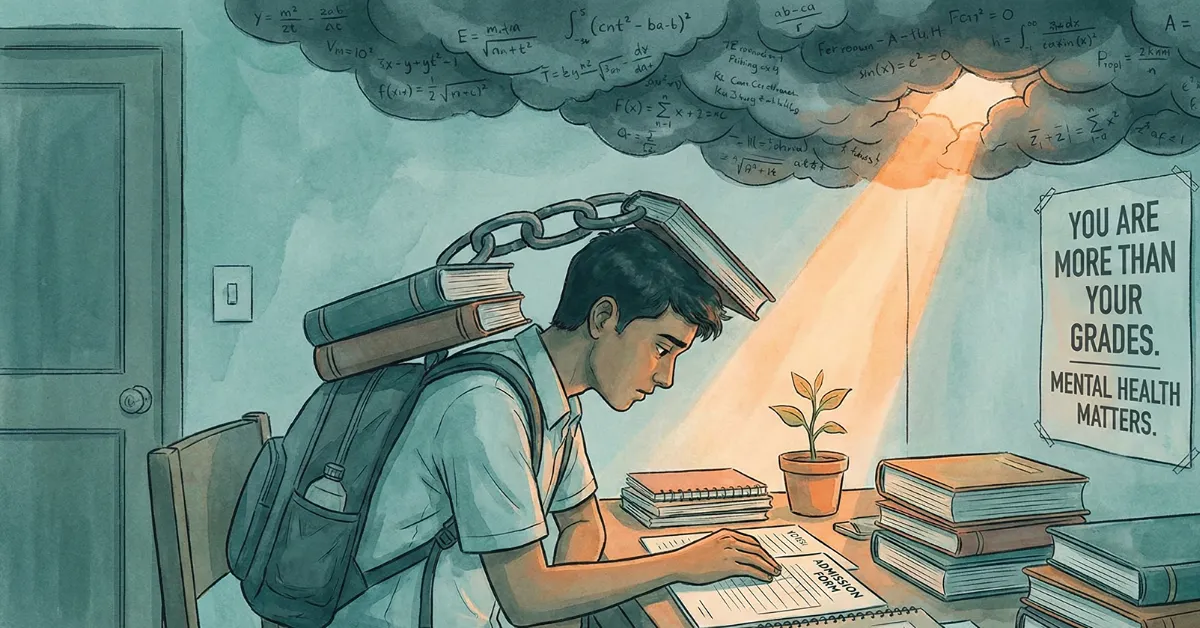
You've survived twelve years of school. You've made it through SSC. You've pushed through HSC. And now, standing at the edge of what should be an exciting future, you feel like you're staring into an abyss.
University admission in Bangladesh isn't just an exam—it's a war. A war for limited seats. A war against lakhs of competitors. A war that feels like it will determine your entire worth as a human being.If you're an HSC graduate feeling the crushing weight of admission stress, or a parent watching your child crumble under pressure, this article is for you.
At Mindspace, we've seen the devastating toll that admission season takes on young people's mental health. We want you to know: your life is worth more than any admission result.
The Reality of University Admission in Bangladesh
The Numbers That Create Pressure
Let's be honest about what students face:
| University | Available Seats | Applicants | Acceptance Rate |
|---|---|---|---|
| Dhaka University | ~7,000 | ~300,000+ | ~2.3% |
| BUET | ~1,200 | ~15,000+ | ~8% |
| Medical Colleges | ~5,000 (govt) | ~100,000+ | ~5% |
| Jagannath University | ~4,000 | ~150,000+ | ~2.7% |
This isn't normal academic pressure—this is a Pandora's Box of stress, fear, and desperation that opens every year after HSC results.
What Students Experience
The Timeline of Terror:Why It Feels So Devastating
- One chance per year — Can't retake immediately- Social comparison — "Everyone" seems to be getting in- Family pressure — Expectations feel suffocating- Financial investment — Coaching costs, exam fees- Identity stakes — Self-worth tied to admission- Limited alternatives — Few quality options outside top universities
Understanding Admission Stress: It's More Than "Nerves"
Normal Stress vs. Clinical Concern
| Normal Admission Stress | Warning Signs |
|---|---|
| Nervousness before exams | Constant anxiety, panic attacks |
| Some sleep disruption | Unable to sleep for days |
| Irritability during prep | Explosive anger, withdrawal |
| Worry about results | Hopelessness, suicidal thoughts |
| Motivation to study | Unable to focus despite trying |
| Seeking support | Isolating completely |
Depression Symptoms in Students
Depression during admission season can look like:
Emotional Signs:- Persistent sadness or emptiness- Hopelessness — "What's the point?"- Worthlessness — "I'm not good enough"- Guilt — "I'm disappointing everyone"- Irritability and anger- Loss of interest in everythingPhysical Signs:- Fatigue despite rest- Sleep problems (too much or too little)- Appetite changes- Headaches, stomach aches- Moving slowly, feeling heavy- Physical restlessnessCognitive Signs:- Can't concentrate despite hours of studying- Memory problems- Negative thoughts on repeat- Thoughts of death or suicide- Feeling like a burden to familyBehavioral Signs:- Withdrawing from friends and family- Neglecting self-care- Giving up on studying- Substance use (tea, cigarettes, pills to stay awake)- Self-harmAnxiety Symptoms
Admission anxiety can manifest as:
- Panic attacks — Racing heart, sweating, feeling like dying- Constant worry — Unable to stop catastrophic thinking- Physical tension — Headaches, jaw clenching, muscle pain- Avoidance — Skipping practice tests, avoiding study- Perfectionism paralysis — Can't study because nothing feels "enough"- Exam hall freeze — Mind going blank despite preparation
The Hidden Crisis: Student Suicide
We need to talk about what nobody wants to say:
Every admission season, Bangladesh loses students to suicide.Understanding the Risk
Students may consider suicide when they feel:
- Trapped — No way out of the situation- Hopeless — Things will never get better- Burden — Family would be better off without them- Alone — No one understands their pain- Failure — They've let everyone down permanently
Warning Signs of Suicidal Thoughts
Take these seriously:- Talking about wanting to die or being a burden- Searching for methods online- Giving away possessions- Saying goodbye to people- Sudden calm after period of depression- Withdrawing completely- Increased substance use- Dramatic mood changes- Writing notes or messages with finality
If You're Having Suicidal Thoughts
Please hear this:- This feeling will pass. Admission results are temporary; your life is permanent.- You are not a burden. Your family wants you alive, not successful and dead.- There are other paths. Many successful people failed admission tests.- Your worth isn't your admission. You are valuable regardless of any exam.- Help is available. Right now. Call someone.
Emergency Resources
| Resource | Contact |
|---|---|
| Kaan Pete Roi | 01779-554391 |
| National Mental Health Helpline | 16789 |
| Emergency | 999 |
| Mindspace | Contact us |
Coping Strategies: Surviving Admission Season
For Students
1. Reframe Your Thinking
Unhelpful Thought: "If I don't get into DU, my life is over."Reframe: "DU is one path. If it doesn't work out, I'll find another path. Many successful people didn't go to top universities."Unhelpful Thought: "I'm not as smart as the others."Reframe: "Admission tests measure test-taking ability in one moment, not intelligence or potential."CBT Technique — Question Your Thoughts:- Is this thought 100% true?- What's the evidence against it?- What would I tell a friend thinking this?- Will this matter in 10 years?- What's the worst that could happen, and could I survive it?2. Manage Your Study Routine
Sustainable Studying:- Regular breaks — 50 minutes study, 10 minutes break- Sleep is non-negotiable — 7-8 hours; sleep consolidates memory- Physical movement — Even 15 minutes of walking helps- Variety — Rotate subjects to maintain interest- Practice tests — Simulate exam conditionsAvoid:- All-night cramming sessions (reduces retention)- Excessive caffeine (increases anxiety)- Comparing study hours with others- Skipping meals- Complete isolation3. Protect Your Mental Health
Daily Practices:- 5-minute breathing exercise — Box breathing (4 counts in, hold 4, out 4, hold 4)- Physical exercise — Releases stress hormones- One enjoyable activity — Music, walk, short video- Social connection — Even brief chat with a friend- Gratitude moment — Three things that went okay todayWeekly Practices:- One day with reduced study — Rest improves performance- Time with family/friends — Support matters- Physical activity — Sports, walking, exercise- Hobby time — Something not related to admission4. Build Perspective
Reality Check:- Bangladesh has produced successful people from every university- Many entrepreneurs, artists, and professionals never attended "top" universities- Skills, networking, and persistence matter more than university name in long run- You can transfer, study abroad, or take alternative paths- Private universities and national universities produce capable graduates tooAsk Yourself:- What do I actually want to do with my life?- Is this specific university necessary for that goal?- What's my backup plan, and is it really that bad?5. Create a Support System
- Identify one trusted adult — Parent, teacher, relative- Connect with friends — You're all in this together- Study groups — Reduce isolation- Professional support — Counselor if needed- Online communities — Others understand
For Parents
What Your Child Needs from You
Do:✅ Express unconditional love — "Whatever happens, we love you"✅ Reduce pressure — Your anxiety adds to theirs✅ Provide practical support — Food, quiet space, transportation✅ Listen without judgment — Let them vent✅ Normalize failure — Share your own setbacks✅ Discuss backup plans calmly — Other options exist✅ Watch for warning signs — Depression, suicidal thoughts✅ Seek help if needed — Professional supportDon't:❌ Compare to others — "Your cousin got into BUET"❌ Threaten — "If you don't get in..."❌ Dismiss feelings — "Stop being dramatic"❌ Add financial guilt — "After all we spent on coaching"❌ Micromanage study — Trust them❌ Share your anxiety — Keep your worries to yourself❌ Define success narrowly — Only one university mattersWhat to Say
| Instead of... | Try... |
|---|---|
| "You have to get into DU" | "Do your best and we'll handle whatever comes" |
| "After all we've sacrificed" | "We're proud of your effort regardless of results" |
| "Your cousin got in, why can't you?" | "Everyone has their own journey" |
| "Don't be nervous" | "It's normal to feel nervous. How can I help?" |
| "What will people think?" | "What matters is that you're healthy and trying" |
Recognizing When Professional Help Is Needed
Seek help immediately if your child:- Talks about suicide or being a burden- Shows dramatic personality changes- Stops eating or sleeping- Withdraws completely- Engages in self-harm- Seems hopeless about everything
After Results: Handling Outcomes
If You Get In
- Celebrate — You earned it- Be gracious — Friends may not have succeeded- Prepare mentally — University has its own challenges- Thank supporters — Family, teachers who helped- Rest and recover — You've been through a lot
If You Don't Get In
The First Hours/Days:- Feel your feelings — It's okay to be devastated- Reach out — Don't isolate- Avoid major decisions — Don't decide your future in despair- Basic self-care — Eat, sleep, hydrate- Stay safe — If you're having dark thoughts, tell someoneThe First Weeks:- Grieve the loss — It's a real loss, even if temporary- Limit social media — Others' success posts hurt- Make a plan — What's next? Options exist- Connect with others who didn't get in — You're not alone- Consider counseling — Process the experienceMoving Forward:- Evaluate options: - Try again next year? - Private university? - National university? - Polytechnic/diploma courses? - Study abroad? - Different career path?- Remember: This is a delay, not a denial. Many paths lead to success.
Alternative Paths: Life Beyond "Top" Universities
Success Stories
- Entrepreneurs who never finished university- Professionals who transferred or studied elsewhere- Artists, writers, athletes with non-traditional paths- People who succeeded after initial "failure"
Other Options
| Path | Opportunities |
|---|---|
| Private Universities | BRAC, NSU, IUB, AIUB — quality education |
| National University | Large network, affordable |
| Polytechnic | Technical skills in demand |
| Vocational Training | Practical career skills |
| Study Abroad | Scholarships available |
| Gap Year | Work, explore, prepare again |
| Online Learning | Global courses, certifications |
What Actually Matters for Success
Research shows career success depends more on:
- Skills — Technical and soft skills- Networking — Relationships and connections- Persistence — Bouncing back from setbacks- Emotional intelligence — Managing self and others- Adaptability — Learning and changing- Work ethic — Consistent effort
University name matters less than most people think.Mindspace: Supporting Students Through Admission Stress
At Mindspace, we understand the unique pressure Bangladeshi students face:
Our Services for Students:
- Individual counseling — Anxiety, depression, stress management- CBT-based interventions — Practical coping techniques- Crisis support — For students in acute distress- Family sessions — Helping parents support children- Group support — Connect with peers facing similar challenges- Online sessions — Convenient and confidential
When to Reach Out:
- You're feeling overwhelmed and can't cope- You're having thoughts of self-harm or suicide- You can't study despite trying- You're experiencing panic attacks- Your relationships are suffering- You feel hopeless about the future
For Parents:
- Guidance on supporting your child- Family therapy if communication has broken down- Your own support — parental stress is real too- Resources and information
A Message to Students
To every HSC graduate reading this with a heavy heart:
You are not your admission result.Your value as a human being was established the day you were born. No exam can add to it or take away from it.
The pressure you feel is real, but it's also temporary. In five years, ten years, the specific university will matter far less than you think. What will matter is that you survived this difficult time with your mental health intact.
Please:- Be kind to yourself- Ask for help when you need it- Remember that failure is not fatal- Know that your life matters more than any seat at any universityIf you're struggling, reach out. To family. To friends. To us at Mindspace. To the helplines listed above.
Your life is worth more than any admission. Please stay.Emergency Contacts
If you or someone you know is in crisis:
- Kaan Pete Roi: 01779-554391- National Mental Health Helpline: 16789- Emergency: 999
Reach out. Right now. Your life matters.Frequently Asked Questions
Is it normal to feel this stressed about admission?
Some stress is normal. But if stress is affecting your daily functioning, sleep, appetite, or you're having thoughts of self-harm, please seek professional help.My parents are adding more pressure. How do I talk to them?
Try: "I know you want the best for me. But I need you to know that the pressure is really affecting me. Can we talk about it?" If they don't understand, consider involving a counselor who can mediate.What if I fail and my life is ruined?
Your life won't be ruined. It will be different than you planned, but different isn't ruined. Many successful people took unconventional paths.How do I support a friend who's struggling?
Listen without judgment. Take any mention of suicide seriously. Encourage them to talk to an adult or professional. Don't promise to keep secrets about self-harm.Mindspace is here for you. Whatever your results, whatever your path, your mental health matters. Reach out today.Survive first. Succeed later. Stay alive.